

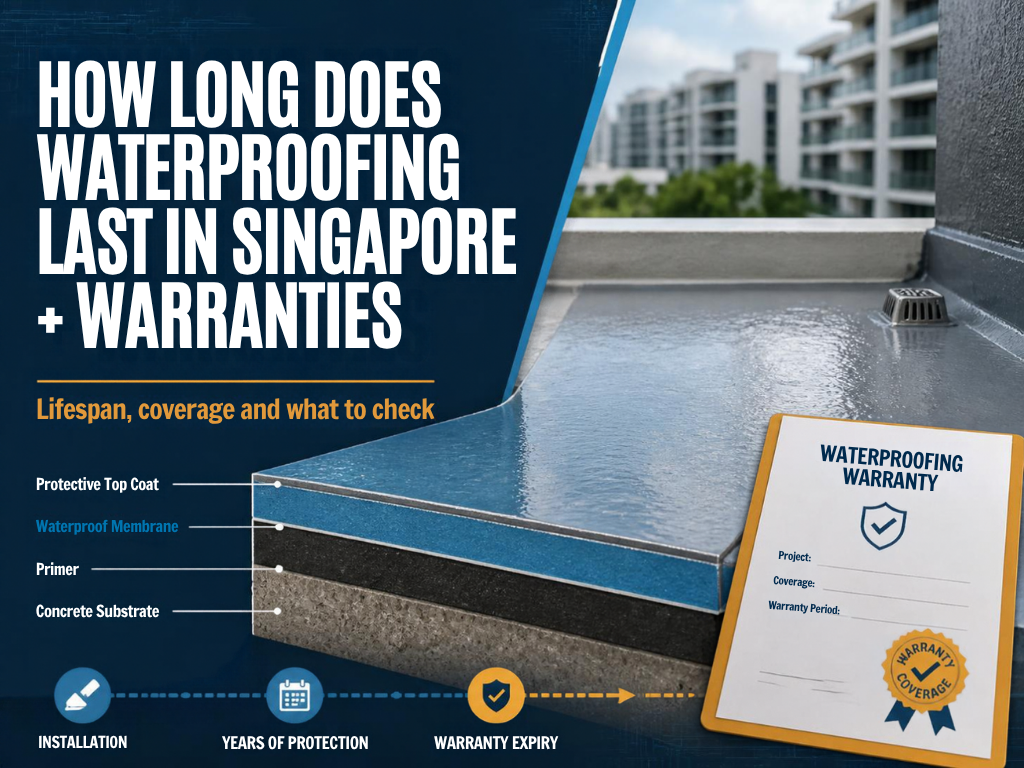
How long waterproofing lasts in Singapore depends on the system’s tested classification and the maintenance behind it. European certification rates liquid roof kits at 5, 10 or 25 years of working life, while a 2024 study published by BCA found some facade materials here reaching only 10 years. This blog walks you through both numbers and the warranty, alongside waterproofing systems and scope.
How long does waterproofing last in Singapore?
Rated working life runs from 5 to 25 years, and Singapore conditions pull real performance towards the lower end of whatever the product claims. The system’s certification, not the salesperson’s estimate, is the number to work from.
ETAG 005, now EAD 030350-00-0402, classifies liquid applied roof waterproofing kits in three working life categories: W1 at 5 years, W2 at 10 years and W3 at 25 years. Kits used on roof gardens, inverted roofs and green roofs must be at least W2.
Singapore contractor claims sit above those bands. CWP’s site puts roof waterproofing at 15 to 25 years and toilet waterproofing at 10 to 15, while AllSeal’s membrane comparison puts bituminous membrane at 10 to 15 years.
| System | Published Singapore claim | Certified reference point |
| Liquid roof kit, top category | 15 to 25 years (CWP) | W3, 25 years expected working life (ETAG 005) |
| Bituminous membrane | 10 to 15 years (AllSeal) | Product standards SS 374 and SS 133 set specification, not life |
| Wet area membrane | 10 to 15 years (CWP) | No classification commonly quoted |
Worth noting: a claim without a classification is an opinion. Ask which category the certificate states, and whether the certificate covers the severe climate zone and the high surface temperature band.
Why does waterproofing fail faster in the tropics?
Heat, ultraviolet exposure and standing water compress the ageing cycle. Roof surfaces here take intense UV nearly every day of the year, and rain arrives every month rather than seasonally.
BCA has published local evidence. The 2024 National University of Singapore study in BCA’s PFI Guidelines V1.3 used accelerated weathering and Meteorological Service Singapore climate projections, finding tile adhesive service life dropping to about 10 years, a reduction of up to 30%, while aluminium rivets fell to about 22 years.
Load plus heat is the combination that matters. Yu Chunchun’s December 2024 review in the International Journal of Infrastructure Research and Management states that “the impact of sustained loading is more pronounced under high-temperature conditions”, which describes a ponded roof deck under afternoon sun.
Failure rates support the picture. Senarathne, Asmone and Chew reported in Buildings in 2023 that waterproofing defects appeared in 59% of the buildings they studied in the tropics.
Detailing decides most of it. On RC flat roof systems, the membrane in the open field rarely fails first; upstands, outlets and movement joints do.
How long is a waterproofing warranty in Singapore?
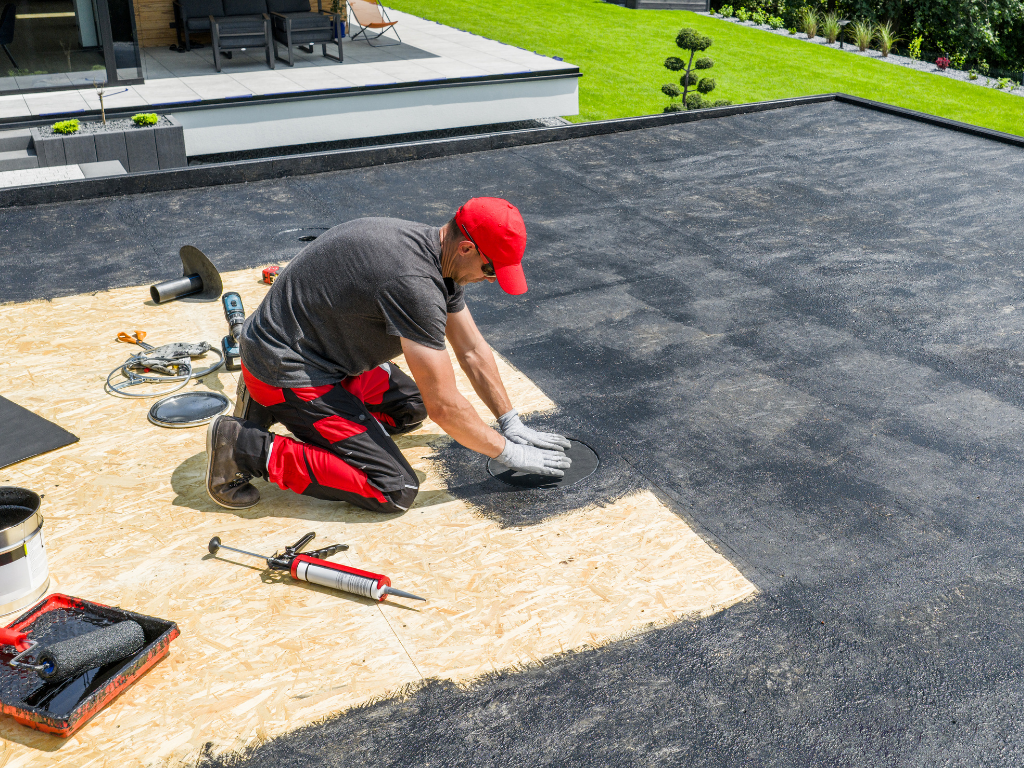
Published warranties run from 1 to 10 years, and no law or standard fixes the period. Five years on workmanship is the figure most specialists quote for membrane systems.
The published range is wide enough to be confusing. CWP states it provides warranties of 1 to 10 years depending on area and material. VH Waterproofing says most HDB waterproofing warranties last a year and offers up to 3. contractors.com.sg calls 10 years the standard period for waterproofing. The Roof Specialist calls a 5-year workmanship warranty the minimum, alongside a manufacturer product warranty of 10 to 15 years.
The accreditation scheme does not settle it either. SCI’s criteria, revised 7 June 2026, require accredited firms “to provide warranty as per client requirement”, which makes the warranty a negotiated term rather than an industry standard.
Our position: treat 5 years of workmanship cover as the floor for a full membrane replacement, and treat anything under 2 years as a signal about the scope or the substrate, not about price.
Workmanship warranty or material warranty: what is the difference?
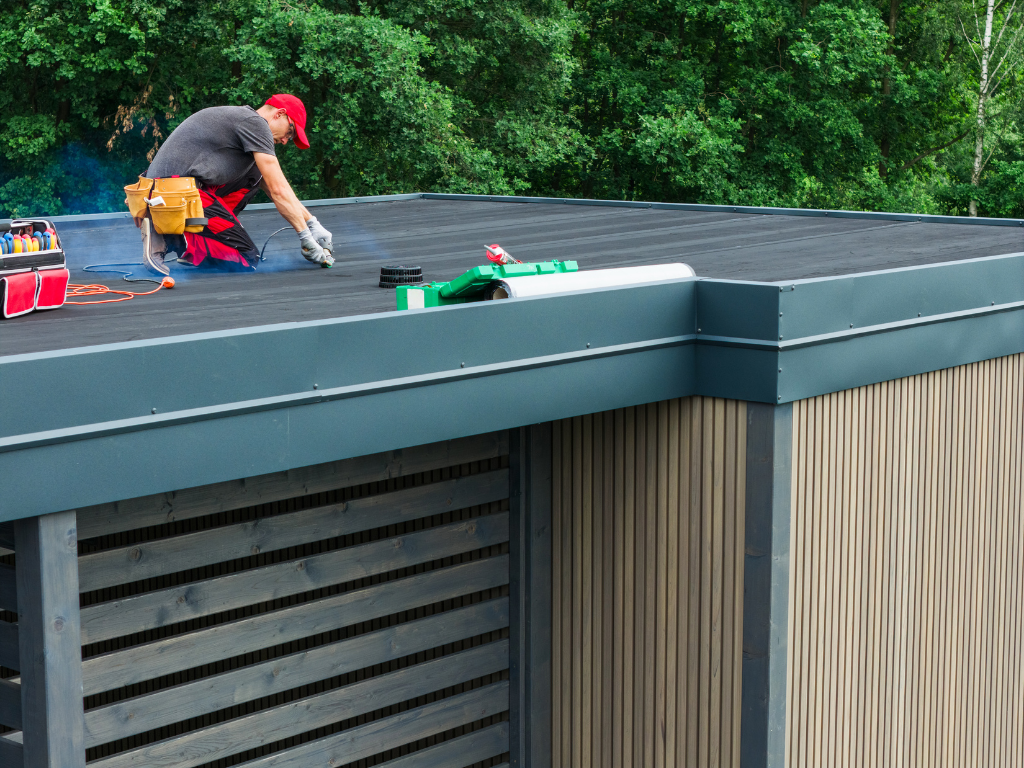
A workmanship warranty is issued by the contractor and covers installation defects. A material warranty is issued by the manufacturer and covers product failure. They fail in different ways and are claimed from different parties.
Most disputes land on the workmanship side. Trapped moisture under a membrane, inadequate priming, thin film build and poorly formed upstands are application faults, and the manufacturer will say so when the claim reaches it.
Material warranties also carry conditions owners rarely read. Manufacturers commonly require an approved applicator, registration of the project, and application within stated thickness and temperature limits, and they cover replacement material rather than labour or access.
Ask for both documents before final payment, and check that the contractor’s name on the material warranty matches the company on your contract.
The two also expire on different clocks. A 5-year workmanship warranty and a 10-year material warranty issued on the same day leave a five-year window where the product is covered but the labour and access to replace it are not, which on a high-rise roof is the larger cost.
What should a waterproofing warranty actually say?
Six things, in writing. Anything missing from this list becomes an argument at the point of claim.
| Term | What it should state |
| Scope by area | Each area and its square metre extent, listed separately |
| Duration and start date | Years for workmanship, years for materials, counted from practical completion |
| Defined defect | What counts as failure, such as water penetration through the treated area |
| Response commitment | Time to attend and time to rectify after notification |
| Reinstatement | Who repairs finishes, ceilings and paint damaged by the leak or the repair |
| Conditions and exclusions | Maintenance duties, alterations, and events outside cover |
Two further clauses separate a serious document from a slip of paper. Transferability, so the warranty survives a sale of the property, and the evidence pack from handover, including the ponding test record that BCA’s Quality Mark Scheme guide sets at a minimum of 24 hours.
A warranty is only as good as the company behind it. The checks that matter when vetting a contractor properly are the same ones that decide whether anyone answers the phone in year four: registration status, trading history and financial standing.
Which exclusions are normal, and which are red flags?
Normal exclusions cover events outside the contractor’s control: structural movement and cracking, damage by other trades, alterations after handover, and blocked drainage caused by lack of cleaning.
Red flags look different. Excluding ponding water on a flat roof, excluding UV degradation on an exposed system, or excluding “acts of weather” in a tropical climate removes cover for the conditions the system was sold to handle.
Watch for silent exclusions too. A warranty that covers the membrane but not the upstands, or that stops at the perimeter of the treated area while the leak appears two metres away, provides less than it appears.
In practice, the fairest split names three categories: defects the contractor fixes free, events the owner pays for, and conditions that suspend cover until corrected.
Read the exclusions against the site you actually have. A basement warranty that excludes hydrostatic pressure, or a planter box warranty that excludes root penetration, has excluded the reason you bought the system, and that is worth raising before signing rather than after the first leak.
What voids a waterproofing warranty?
Hacking, drilling and alterations by other trades void cover for the affected area. Every published Singapore warranty page names these first, and they account for most rejected claims.
Renovation is the usual culprit. Fixing a rack to a shower wall, coring through a balcony slab for a drain, or laying new tiles over a membrane without protection all breach the system.
Neglect voids cover more slowly. Blocked roof outlets, debris that traps water and plant equipment dragged across a membrane are all maintenance failures, which is why cover hangs on documented upkeep.
Unauthorised repairs by another contractor end the argument entirely. Once someone else has coated over the area, nobody can establish the original failure mode, and both the contractor and the manufacturer will decline the claim.
Report leaks in writing as soon as they appear. Owners who fund stopping water damage early with prompt notification keep the claim alive; owners who wait a year hand the contractor a defence.
What rights do you have after the warranty expires?
Contract law, for a limited window. Section 6 of the Limitation Act 1959 bars actions founded on contract or tort more than 6 years after the cause of action accrued, so a claim for defective work has a longer tail than most warranties.
Latent damage has its own ceiling. Section 24B bars negligence claims for latent damage 15 years after the act or omission alleged to constitute negligence, regardless of when the damage was discovered.
New buildings add one more layer. The developer’s defects liability period under URA’s guidance runs 12 months from vacant possession, which closes long before any waterproofing system reaches its rated life.
Damage found late costs more than the membrane. Water reaching reinforcement turns a coating job into concrete repair works with access and structural design attached.
Keeping the paperwork is what preserves the option. Contract, warranty, product data sheets, test records and correspondence are what a claim rests on 5 years later.
What maintenance keeps a system to its rated life?
Scheduled inspection, drainage clearing and timely recoating. Rated working life assumes maintenance; certification tests do not simulate blocked outlets and neglected joints.
Set the interval by exposure. Exposed roofs and decks warrant inspection at least twice a year and after any severe storm, with outlets, upstands, sealant joints and flashing checked each time.
Recoating extends a liquid system rather than replacing it. Topcoats take the UV load, and renewing one on schedule is a fraction of the cost of stripping and redoing a full build-up.
Budget the replacement before it is urgent. BCA’s Tender Price Index rose from 98.6 in 2018 to 139.1 in 2025, about 41%, so a sinking fund figure set at the last replacement understates the next one.
Fold it into the estate’s plan. A written schedule for tropical maintenance planning turns inspections into a recorded routine, which is also the evidence a warranty claim needs.
Photograph each inspection. Dated images of outlets, upstands and the membrane surface build a record that shows whether a later failure started as neglect or as a defect.
Conclusion
Rated life, warranty period and actual performance are three different numbers, and only the first two are written down. Certification tells you what the system was tested to achieve, the warranty tells you what the contractor stands behind, and maintenance decides which you get. Specify the working life category, put the warranty terms in writing, and keep the handover records.
Send Proof-Tech your existing warranty document and roof or wet area details for a review of what it covers, plus a quotation stating system classification, test regime and warranty terms in writing.
Frequently asked questions
Is a 10-year waterproofing warranty realistic in Singapore?
Yes for materials, less common for workmanship. The Roof Specialist publishes manufacturer product warranties of 10 to 15 years alongside a 5-year workmanship minimum, while CWP publishes 1 to 10 years overall. Check whether the 10 years covers labour and access or only replacement material.
Does a waterproofing warranty transfer when I sell the property?
Only if the document says so. Transferability is a negotiated term, not an automatic right, and many warranties name the original contracting party alone. Ask for a transfer clause before signing, and hand the buyer the warranty, product data sheets and the 24-hour ponding test record at completion.
Do I need annual inspections to keep the warranty valid?
Most warranties make maintenance a condition of cover. Keep dated records of inspections, outlet clearing and any repairs, because a contractor facing a claim will ask for them. SS 637:2018, the current code for waterproofing of reinforced concrete buildings, treats protection and upkeep of the completed system as part of good practice.