

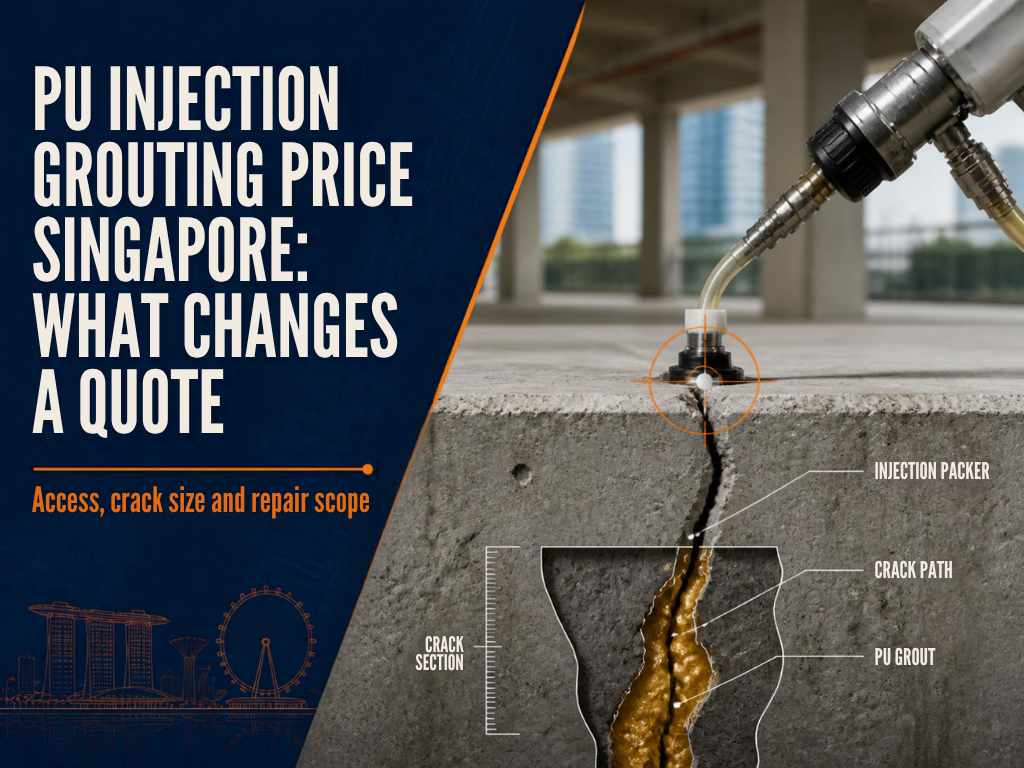
PU injection grouting prices in Singapore run from about $280 for a single crack to $2,200 for inter-floor seepage with multiple wet spots, based on rates contractors published in 2026. Point count, crack width and access drive the difference. This blog walks you through each factor, alongside leak rectification and repair services.
How much does PU injection grouting cost in Singapore?
Published 2026 rates cluster between $280 and $1,200 for a straightforward crack, rising to about $2,200 where injection is combined with targeted waterproofing. Minimum job pricing starts around $600 for one toilet ceiling.
| Scenario | Published price | Source |
| Hairline slab crack, 1 to 2 ports | $300 to $600, 3 to 4 hours on site | Flux Solutions |
| PU crack injection, general | $280 to $1,200 | General.com.sg |
| PU injection as a method, typical range | $300 to $1,200, same-day | Flux Solutions |
| One toilet ceiling, minimum job | From $600, including protection sheeting, patching and painting | Sin Jit Seng |
| Two toilet ceilings | From $950 | Sin Jit Seng |
| Inter-floor seepage, multiple wet spots | $1,000 to $2,200 over 1 to 2 days, injection plus waterproofing | Flux Solutions |
| Basement wall crack injection | $400 to $800 per square metre of crack, plus GST (2021 figure) | waterproofing.com.sg |
Every number above is a contractor’s own published price rather than an independent benchmark. Use them to sanity-check a quotation, not as a target to negotiate towards.
The word “grouting” alone carries no price signal. The Ministry of Finance’s GeBIZ dataset records grouting contracts from $1,279,800 for pool grouting and tiling at ActiveSG complexes in June 2024 to $10,995,750 for LTA cavity detection and grouting in October 2025.
Worth noting: none of these published figures includes GST, which has been 9% since 1 January 2024.
Is PU grouting priced per point, per metre or as a flat job?
Three models are in use, and they produce different numbers for the same crack. Per point bills each packer installed, per square metre bills the crack area, and flat job pricing bills the room or ceiling regardless of how many points it takes.
Flat pricing protects the owner from point inflation. Sin Jit Seng publishes a minimum job price from $600 for one toilet and from $950 for two, with protection sheeting, patching and painting included, which means the point count stops being the owner’s problem.
Per-point pricing rewards accuracy and punishes vagueness. A contractor quoting per point without stating how many points are expected has quoted nothing, because the count is decided on site with the drill in hand.
Area pricing appears on larger structures. The 2021 figure from waterproofing.com.sg put basement wall crack injection at $400 to $800 per square metre of crack plus GST, which suits long continuous cracks rather than isolated leaks.
Our position: ask for a flat price for a defined area, or a per-point rate with a capped point count. Anything else leaves the final figure open after work starts.
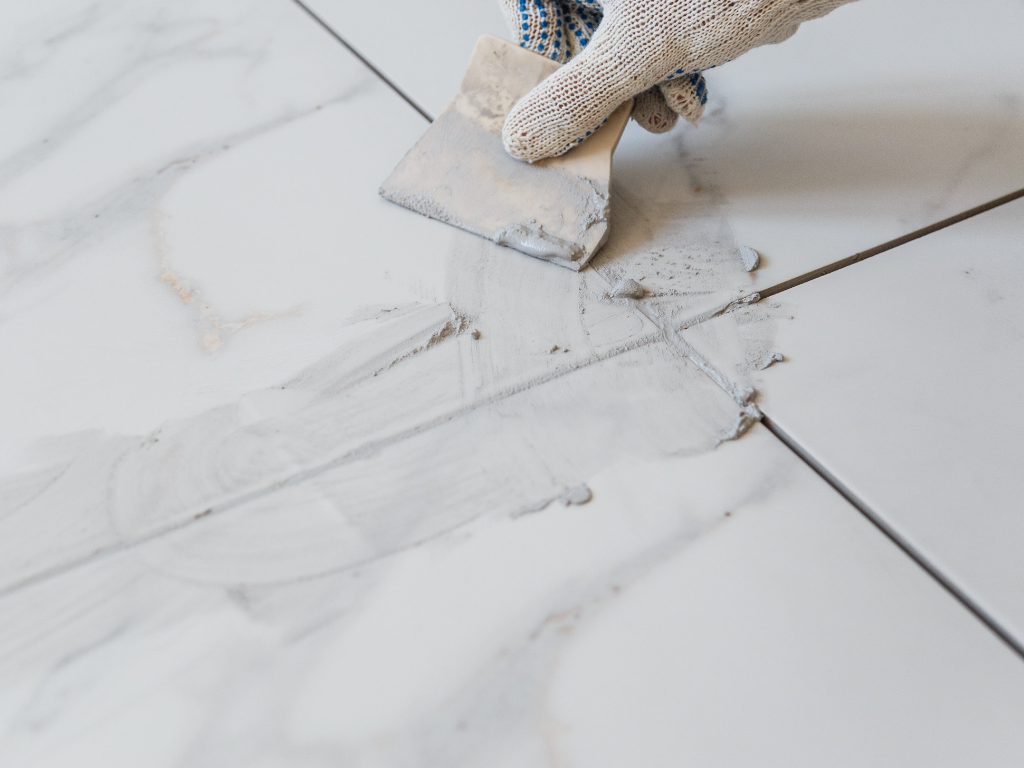
What decides how many injection points a crack needs?
Crack length, slab thickness and the position of the wet area set the count. Packers are drilled at an angle to intersect the crack inside the slab, spaced closely enough that the resin fronts from adjacent points overlap.
Thickness drives the geometry. A thicker slab needs the drill to start further from the crack line to reach it at mid-depth, which widens spacing, while a thin balcony slab takes tighter spacing and more points per metre.
Wet area extent matters more than the visible stain. Water travels along the underside of a slab before dripping, so PU grouting works need points beyond the stained patch to intercept the path rather than the symptom.
Branching cracks multiply the count. A single straight crack takes a line of packers; a map-cracked area or a construction joint meeting a crack takes points along both paths.
A quotation that states the expected point count, the packer spacing and what happens if more points are needed is the one to compare.
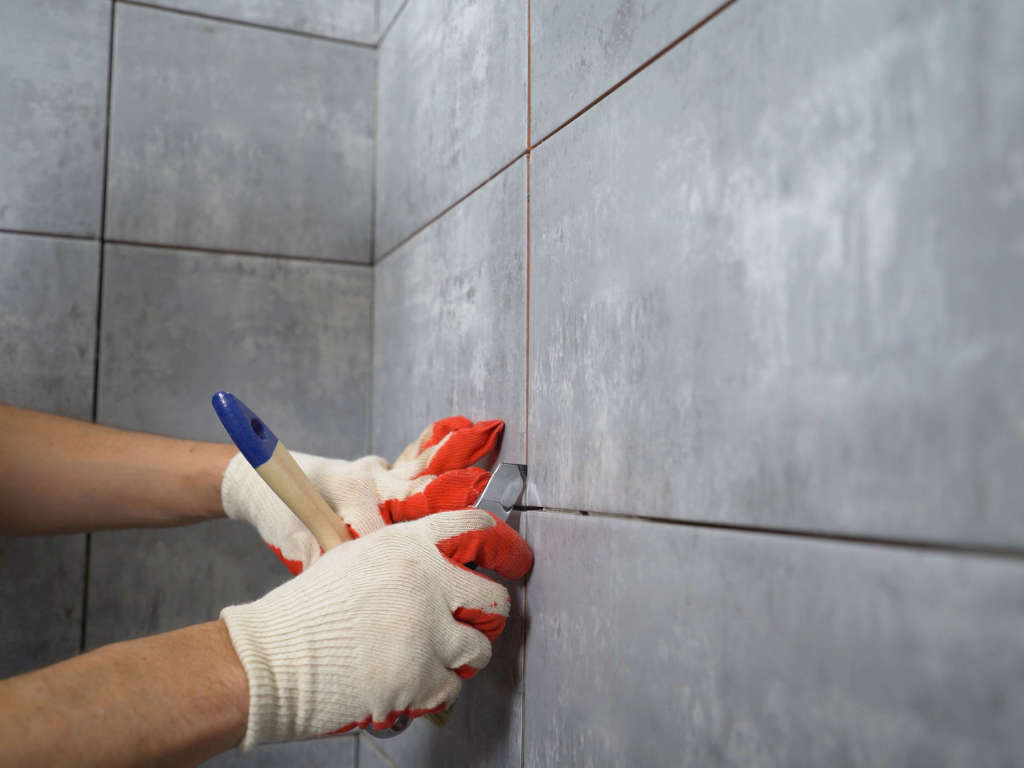
Does crack width change the price?
Yes. Wider cracks take more resin, hold it less well and are more likely to need a second visit, which pushes both the material and the labour line.
The physics is documented. The 2024 study published in Materials found the water-plugging performance of polyurethane grout negatively correlated with crack aperture and positively correlated with crack roughness, so wide, smooth cracks are the hardest to seal.
Volume scales faster than length. Doubling the aperture of a 2-metre crack through a 150 mm slab doubles the void to fill before any expansion, and the resin that escapes into adjoining voids is paid for whether it seals anything or not.
Moving cracks add their own premium. Where a crack opens and closes with thermal movement, a rigid seal breaks, so the specification shifts to a flexible resin, with a surface-applied joint treatment on top where movement continues.
In practice, a crack wider than a hairline is a different job from the one most published price tables describe.
Hydrophobic or hydrophilic resin: does the choice change the quote?
Yes, on both material cost and method. Hydrophilic resins react strongly with water and expand fast; hydrophobic resins react more mildly and hold up better under permanent immersion.
Peer-reviewed characterisation backs the split. Qin and colleagues, writing in Polymers in August 2025, report hydrophilic materials reacting strongly with water “with expansion ratios reaching more than six times”, while hydrophobic materials “react mildly with water, and exhibit excellent water resistance after curing”.
Practitioner guidance adds the activation detail. The Sealant, Waterproofing and Restoration Institute’s technical bulletin on urethane grout injection notes hydrophobic resins needing very little water to cure, as little as 3% by volume, which makes them the choice against a heavy flow.
The trade-off runs the other way in dry cycles. Hydrophilic gels stay swelled while water is present and can shrink when the crack dries out, which matters on a balcony that wets and dries weekly rather than a basement wall under constant head.
Ask which resin the quotation covers and why. A quotation that names neither the product nor the type has not been priced against your leak.
Why do basement, lift pit and water tank jobs cost more?
Water pressure, access and downtime. A slab soffit in a corridor is open, dry and reachable from a ladder; a lift pit is a confined, wet space that has to be drained, isolated and handed back to a lift contractor.
Head pressure changes the method. Water entering under pressure carries resin away before it cures, so the crew injects against flow with faster-reacting resin, works in stages and returns to top up.
Downtime costs the client more than the injection. Taking a lift out of service, draining a water tank or closing a basement car park lane carries a cost the quotation rarely shows but the building pays.
Access rules apply too. Confined space entry, permits and standby attendants add hours before any drilling starts, and out-of-hours work in occupied buildings adds a premium; Flux Solutions publishes a 15% to 25% uplift for urgent callouts, rope access conditions or MCST coordination.
A ceiling stain under a bathroom is a different economic problem from a leaking lift pit, even though both start with what causes ceiling leaks in the same way: water finding a path through concrete.
What is excluded from a PU grouting quotation?
Four lines disappear from cheap quotes: protection of finishes, patching and painting after injection, access equipment, and the second visit if the leak persists.
Reinstatement is the most common gap. Drilling leaves packer holes to fill and a ceiling that needs touching up, and Sin Jit Seng’s published price list is explicit that its minimum job includes sheet protection before injection and patching and painting afterwards, which tells you those items are priced separately elsewhere.
Access is separate again. Scaffold towers in double-volume spaces, rope access on external walls and platform hire on car park soffits are equipment lines, not labour.
Investigation rarely sits inside the injection price. Finding the source with isolation testing is its own scope, and any ceiling leak repair that skips it is injecting at the stain rather than the source.
Ask what the price does when the leak returns. A quotation that promises a return visit within the warranty period, at no charge, is priced differently from one that does not, and it should be.
What warranty comes with PU injection grouting?
Shorter than a membrane warranty. Flux Solutions publishes a warranty norm of 2 to 5 years for PU injection, against the 5 to 10 years commonly published for membrane systems.
The gap is honest. Injection seals the paths water is using today, while a membrane covers the whole surface, so cover reflects what the method controls.
Read the re-leak clause rather than the headline. The terms that matter are whether a new leak within 300 mm of a treated crack counts, how fast the contractor attends, and who pays for reinstatement the second time.
Documentation preserves the claim. Photographs of each packer position, the resin product used and the date of works are what a contractor asks for two years later, and catching a leak early keeps that record short and usable.
Worth noting: a 2-year warranty from a contractor that answers the phone beats a 10-year warranty from one that does not.
When is PU injection the wrong fix?
When the membrane above has failed across an area rather than at a line. Injection stops paths; it does not restore a waterproofing layer.
Three situations call for the membrane instead. Widespread debonding under a bathroom floor, a roof deck where ponding has degraded the coating across the field, and a planter box where the lining has failed at the base.
Injection still has a role in those jobs. It stops the active drip so the ceiling below can dry and the occupant gets relief while the membrane works are planned, tendered and scheduled.
The cleaner sequence is injection now, membrane at the next maintenance window, with the two priced as one programme rather than two emergencies. That approach fits the wider logic of preventing water damage rather than chasing each stain.
Where this breaks down is the contractor who injects the same ceiling three times in two years. By the third visit, the money spent has bought a membrane.
Conclusion
Point count, crack width, resin type and access explain almost every difference between two PU injection quotations for the same ceiling. Published 2026 rates put simple crack work between $280 and $1,200 and inter-floor seepage up to $2,200, but those figures assume a defined scope with reinstatement included. Price the job the way you will be billed: a flat rate for a defined area, or a per-point rate with a capped count.
Send Proof-Tech photographs of the stain, the crack and the space below for a PU grouting quotation stating point count, resin type, reinstatement and warranty terms in writing.
Frequently asked questions
Is PU injection grouting permanent?
It is permanent for the paths it seals, not for the structure. Cured polyurethane resists water, and the 2025 review in Polymers describes hydrophobic grouts holding up under long-term immersion. New cracks, structural movement or a failed membrane above create new paths, which is why warranties run 2 to 5 years rather than indefinitely.
How long does PU injection take, and can I use the room afterwards?
Most single-crack jobs finish in a day. Flux Solutions publishes 3 to 4 hours on site for a hairline crack with 1 to 2 ports and same-day completion for typical PU injection work, with 1 to 2 days where injection is combined with targeted waterproofing across multiple wet spots.
Does PU injection work on an actively leaking crack?
Yes, and active water is part of the mechanism. Polyurethane resins react with water to expand and cure, so a wet crack is a working condition rather than an obstacle. Heavy flow calls for a fast-reacting hydrophobic resin, which the Sealant, Waterproofing and Restoration Institute notes needs as little as 3% water by volume to cure.