

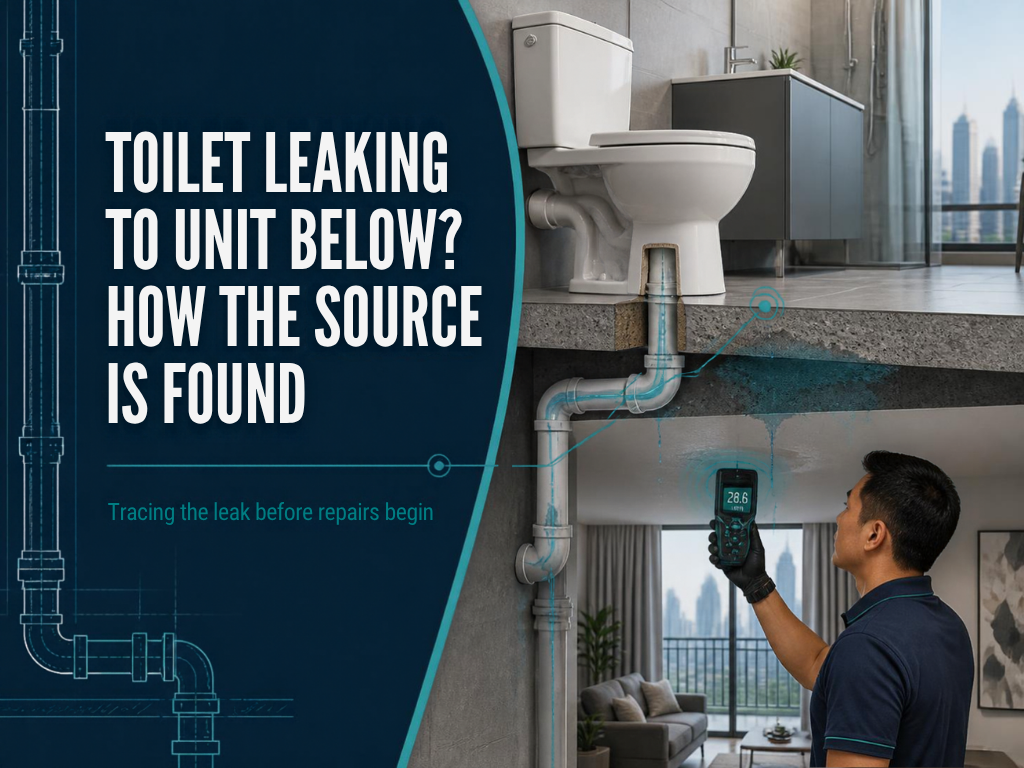
A toilet leaking to the unit below in Singapore is traced by isolation testing: wetting one element at a time, waiting, and watching the ceiling underneath. Section 101(8) of the Building (Strata Management) Act presumes the defect sits in the unit above until evidence shows otherwise. This blog walks you through the process, alongside ceiling leak repair in condominiums.
Who pays when a toilet leaks into the unit below?
The owner of the defective element pays. A failed membrane, floor trap or pipe inside the upper unit is that subsidiary proprietor’s cost; a leaking common riser or structural slab defect is the MCST’s.
The law gives the lower unit a head start. Section 101(8) presumes, in the absence of proof to the contrary, that the defect sits in the lot or common property immediately above where there is dampness, moisture or water penetration on the ceiling below.
That presumption is rebuttable, and the rebuttal is technical. An isolation test report that clears the upper unit’s fittings shifts attention to the riser, the slab or the neighbouring stack.
Cost follows the finding, so the investigation is worth paying for before anyone argues. Splitting the investigation fee between both owners, with the responsible party reimbursing it afterwards, keeps the work moving while liability is open.
Worth noting: the managing agent coordinates access but does not decide liability. That sits with the evidence, and failing that, with a Strata Titles Board.
What causes a toilet to leak into the unit below?
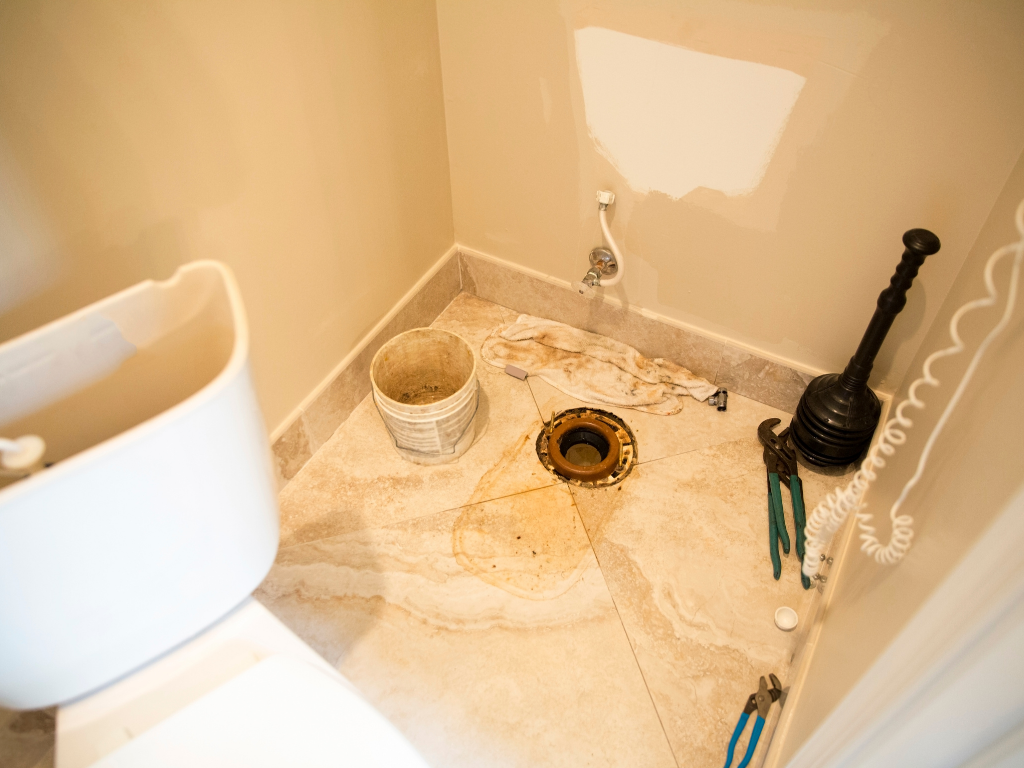
Five sources account for nearly all of it: a failed waterproofing membrane under the tiles, a leaking floor trap, a defective concealed pipe, saturated screed tracking water sideways, and water passing through open grout lines into a screed with no working membrane.
Wet areas are the worst-performing part of a residential block. Chew and De Silva studied internal water leakage in wet areas across 1,500 high-rise residential blocks in Singapore aged 0 to 35 years, and reported that failure to achieve internal water-tightness is “the most significant defect in wet areas of high-rise residential buildings”, with ceiling leaks accounting for 36% of defects.
The defect type matters for the repair. Research published in Buildings in 2023 by Senarathne, Asmone and Chew recorded water penetration through cracks at 21.5% of reported waterproofing defects, blistering at 15.3%, and dampness and condensation at 11.8% each.
Renovation history is the most common trigger in condominiums. Re-tiling a bathroom without renewing the membrane, coring for a new floor trap, or drilling a shower screen fixing through the upturn all breach a layer nobody can see afterwards.
Stain position tells you less than owners assume. Water runs along the slab soffit before it drips, which is why common ceiling leak causes are traced by testing rather than by pointing at the wet patch.
How do contractors find the source of a bathroom leak?
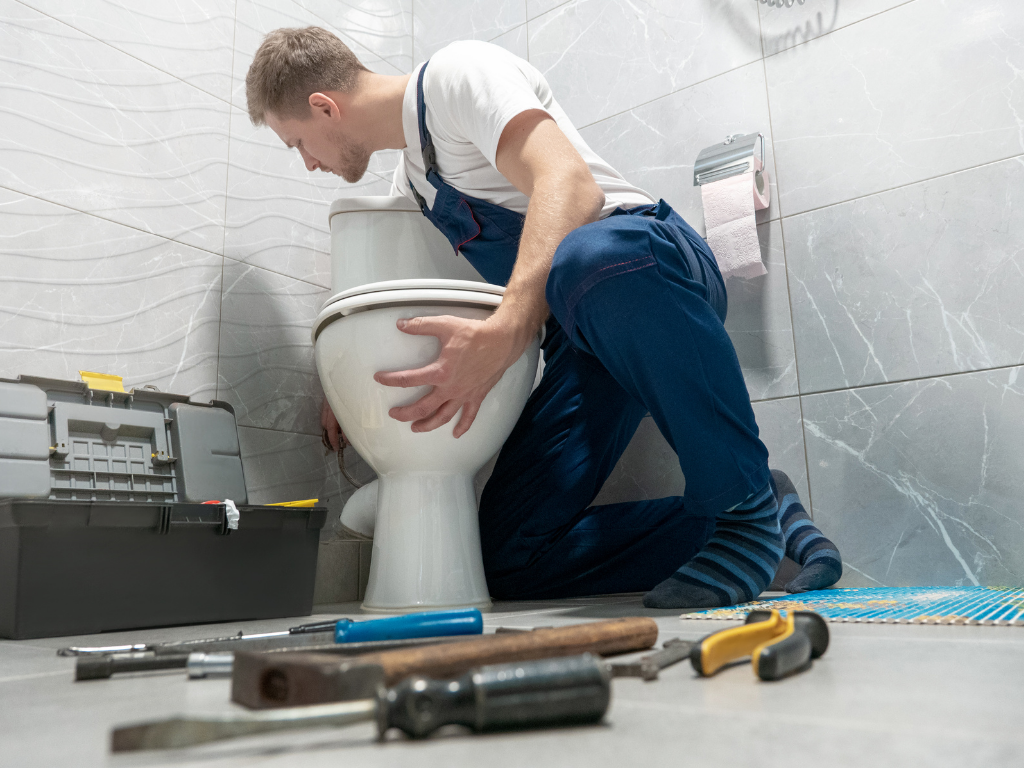
By isolating each water source and watching the ceiling below between tests. One element is wetted at a time, the area is left for a set period, and the result is recorded before moving to the next.
A defensible sequence runs in this order.
| Step | What is tested | How it is done |
| 1 | Baseline | Ceiling below photographed and moisture-mapped before any water is used |
| 2 | Floor trap | Trap sealed and the surrounding floor kept dry while water is held in the trap |
| 3 | Shower area | Shower run and floor ponded within the wet zone only |
| 4 | WC connection and cistern | Flushed and run with the floor kept dry |
| 5 | Basin and waste | Filled and drained repeatedly, floor dry |
| 6 | Concealed pipework | Pressure test on the supply line with all outlets closed |
| 7 | Floor slab | Full floor ponding after every fitting has been cleared |
Each stage needs waiting time. Water takes hours to travel through screed and slab, so a sequence rushed in one morning produces a false negative and a second visit.
Record everything as you go. Dated photographs of the ceiling below at each stage are what a managing agent, an insurer or a Board reads later, and they are the same records that make spotting leaks early useful rather than anecdotal.
Where this breaks down is the contractor who runs every tap at once and declares the bathroom guilty. That is a guess dressed as a test.
What equipment is used to detect the leak?
Four tools carry most investigations: a moisture meter, a thermal imaging camera, dye tracing and a borescope. None of them replaces isolation testing; they narrow it.
Moisture meters map the wet zone on the ceiling below and show whether it is spreading between visits. Two readings a week apart separate an active leak from residual dampness in a slab that is drying out.
Thermal imaging shows temperature differences behind finishes, which makes a wet path visible without opening the ceiling. It reads surface temperature rather than water, so it points the camera operator at where to test next.
Dye tracing settles arguments between fittings. Colouring the water in one fitting proves which path feeds the stain when two candidates sit close together.
A borescope inspects pipe chases and ceiling voids through a small hole. That matters when the suspected source is a concealed pipe or a riser rather than the floor, which is also the point where the scope shifts towards wall leakage repair instead of the bathroom floor.
How long does the investigation take, and what access is needed?
Plan for two visits across three to seven days, with access to both units. A single visit can only cover part of the sequence, because each test needs hours for water to travel.
Access is the constraint, not the testing. Both bathrooms and the ceiling below have to be available, sometimes on consecutive days, and the upper unit has to keep the bathroom dry between stages.
Tenanted units add a layer. Managing agents give notice, arrange keys and coordinate two households, which is why an investigation booked on a Monday finishes the following week.
Ceiling access decides the depth of the survey. Where there is a false ceiling below, opening one or two panels turns guesswork into observation of the slab soffit itself.
Buildings with multiple leak reports deserve one coordinated survey. Where stains appear on several floors of the same stack, the riser or the roof above the stack is the suspect, and roof leak rectification turns out to be the actual scope.
Can the leak be fixed without hacking the bathroom?
Yes, when the source is a crack, a joint or a single failed penetration. PU injection grouting seals those paths from the ceiling below, leaving the upstairs tiles untouched.
Published 2026 rates put that work within reach. Flux Solutions prices a hairline slab crack at $300 to $600 for one to two injection ports with three to four hours on site, and General.com.sg prices PU crack injection at $280 to $1,200.
Non-hacking overlay is the other option upstairs. A liquid membrane applied over the existing tiles, with a new screed or finish, restores a barrier without demolition, provided the substrate is sound and floor levels allow it.
Both approaches have limits. Injection stops paths, not area failures, and an overlay traps whatever is wrong beneath it, so neither suits a membrane that has failed across the whole floor.
In practice, injection buys relief quickly for the household below while the bigger decision is made upstairs. It is a legitimate first step, not a permanent answer to a failed membrane.
When does the bathroom have to be hacked and re-waterproofed?
When the membrane has failed across the floor rather than at one point. Repeat leaks in different positions, water appearing after every shower, and a screed that stays saturated between tests all point the same way.
The full scope is a demolition job. Tiles and screed come off, the slab is cleaned and repaired, a new membrane is applied with upturns at walls and around the floor trap, then screed, tiles and fittings go back.
Published 2026 package pricing gives the scale. MoneyBees puts a full hack-and-redo toilet at $5,000 to $8,000 against $4,500 to $6,500 for an overlay, with waterproofing and screed accounting for $1,200 to $2,500 of that.
Sequencing protects the household below. Agree the downtime, protect the ceiling underneath during hacking, and keep the lower unit informed, because vibration drops loose plaster during demolition.
The cleaner approach on an older bathroom is to treat the repair as a renovation with a waterproofing specification attached, not a patch with tiles on top.
How do you prove the repair actually worked?
With a water ponding test on the finished floor, held for at least 24 hours, and a documented inspection of the ceiling below. BCA’s Quality Mark Scheme guide sets that 24-hour minimum on the completed flooring, with any unit showing leakage re-assessed.
The test needs preparation. Floor traps and openings are sealed, water is filled to a stated depth, and the ceiling and walls below are checked at the start, during and at the end of the period.
Timing matters as much as duration. Testing before the membrane or screed has cured to the manufacturer’s stated time produces a failure that says nothing about the workmanship.
SS 637:2018 raised this bar when it replaced CP 82:1999, extending the waterproofing ponding test requirement from 12 hours to 24.
Keep the handover pack. Photographs of the membrane before tiling, the test record with start and end times, product data sheets and the warranty are what the next owner, the MCST or an insurer will ask for.
What does the whole job cost?
Between about $280 for a single injected crack and $8,000 for a full hack-and-redo bathroom, based on rates Singapore contractors published in 2026. The investigation is charged separately.
| Scope | Published 2026 range | Source |
| PU crack injection | $280 to $1,200 | General.com.sg |
| Hairline slab crack, 1 to 2 ports | $300 to $600 | Flux Solutions |
| Typical upstairs-bathroom ceiling leak fixed at source | $600 to $1,800 | Flux Solutions |
| Liquid membrane, wet area | $60 to $95 per m² | PRDT |
| Screed over membrane | $45 to $75 per m² | PRDT |
| Overlay toilet package | $4,500 to $6,500 | MoneyBees |
| Full hack-and-redo toilet | $5,000 to $8,000 | MoneyBees |
Ceiling reinstatement downstairs sits outside most of those figures. Skim, repaint or replace a damaged false ceiling after the source is fixed, not before, or the work gets done twice.
These are other contractors’ published prices rather than independent benchmarks, and none includes GST at 9%.
Budget the prevention too. An estate that funds preventing repeat water damage through scheduled inspections spends less than one that waits for the next stain.
Conclusion
The stain tells you there is water; only isolation testing tells you where it comes from. Test one element at a time with real waiting periods, record each result, and let the finding decide between injection, overlay and full re-waterproofing. Close it with a 24-hour ponding test and a photographic record, because that is what proves the repair to the neighbour, the managing agent and whoever buys the unit next.
Send Proof-Tech photographs of the ceiling stain, the bathroom above and the ceiling access for a leak investigation with a written report naming the source and the rectification scope.
Frequently asked questions
Can the upstairs owner refuse access for a leak test?
They can refuse informally, and it rarely holds. Ask the MCST to coordinate access first; if refusal continues, apply to a Strata Titles Board under section 101 of the Building (Strata Management) Act, which can make orders binding on a subsidiary proprietor and enforceable in the State Courts.
How long before the ceiling stain stops coming back?
Allow four to six weeks of drying after the source is sealed. A slab holds moisture long after the leak stops, so a stain that fades slowly is normal while a stain that spreads means the source was missed. Moisture meter readings taken a week apart settle which one you have.
Is there a warranty on a bathroom leak repair?
Yes, and it is shorter than a membrane warranty. Flux Solutions publishes a warranty norm of 2 to 5 years for PU injection work, against 5 to 10 years commonly published for full waterproofing systems. Ask what a recurrence within the period covers, including ceiling reinstatement downstairs.