

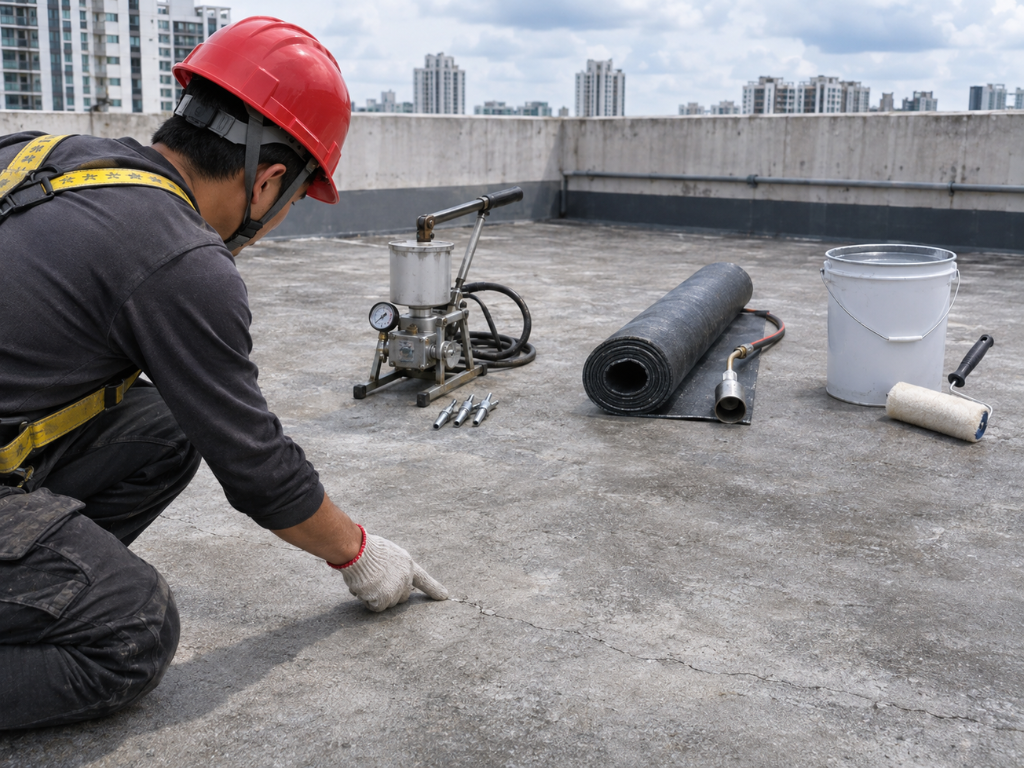
The right roof seepage treatment follows where the water gets through. PU injection seals one slab crack, a membrane patch fixes one failed detail, and a new coating replaces waterproofing that has worn out. Pick the wrong one and you pay for the same leak twice, which the year-end rain shows quickly. Proof-Tech treats roof seepage in Singapore, and for tiled roofs, our roof tile repair and restoration page covers the tile work instead.
Which roof seepage treatment does your leak need?
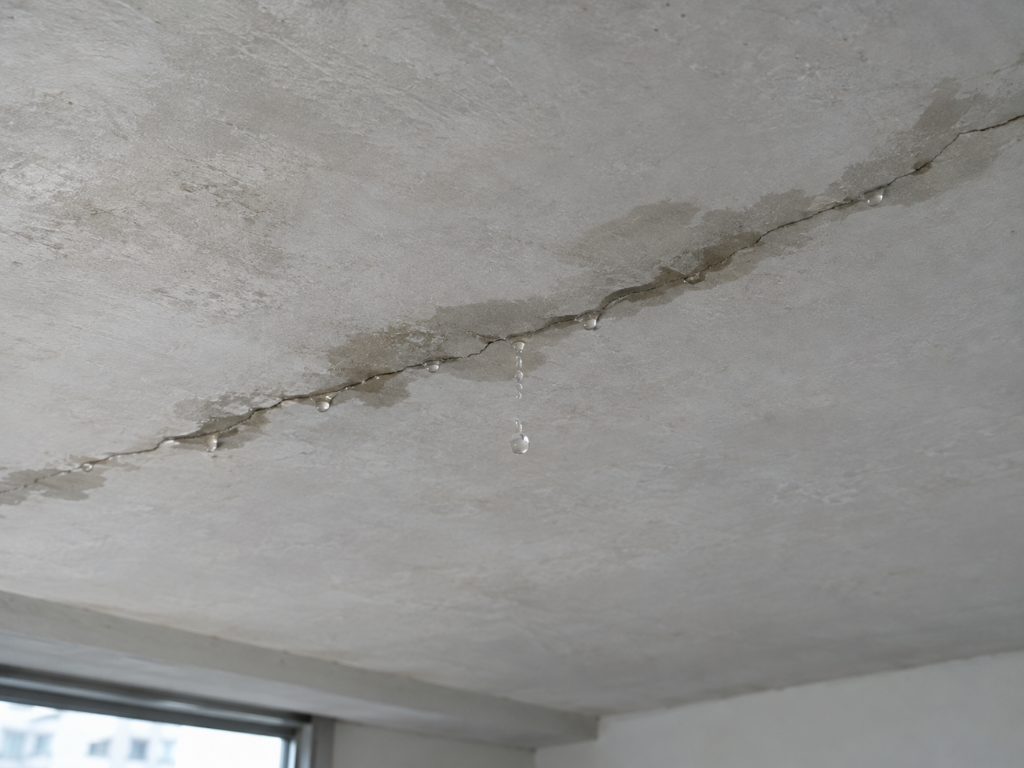
The leak’s pattern tells you. Water dripping along one crack line in the ceiling points to the concrete slab. Water at one corner or edge points to a failed detail in the membrane. Damp patches across several rooms point to waterproofing that has worn out.
| Method | Best for | During an active leak? | Weather it needs | How long it lasts | Typical cost (before GST) |
| PU injection grouting | One RC slab crack or cold joint | Yes, with hydrophobic PU | Any; done from the ceiling side | Lasts on the crack it seals; warranties usually 2 to 5 years | $300 to $1,200 per crack or joint |
| Membrane patch | One failed upturn, outlet, lap or pipe hole | No | A dry day and a dry surface | As long as the membrane around it | $150 to $600 per detail |
| New coating or membrane | Waterproofing worn out across the roof | No | Several dry days in a row | A decade or more from a well-laid system | $8 to $22 per sq ft |
None of these replaces finding the source first. A flood test or water test shows which pattern you have, so the method follows the evidence instead of whichever product a contractor sells.
When is PU injection grouting the right roof seepage treatment?
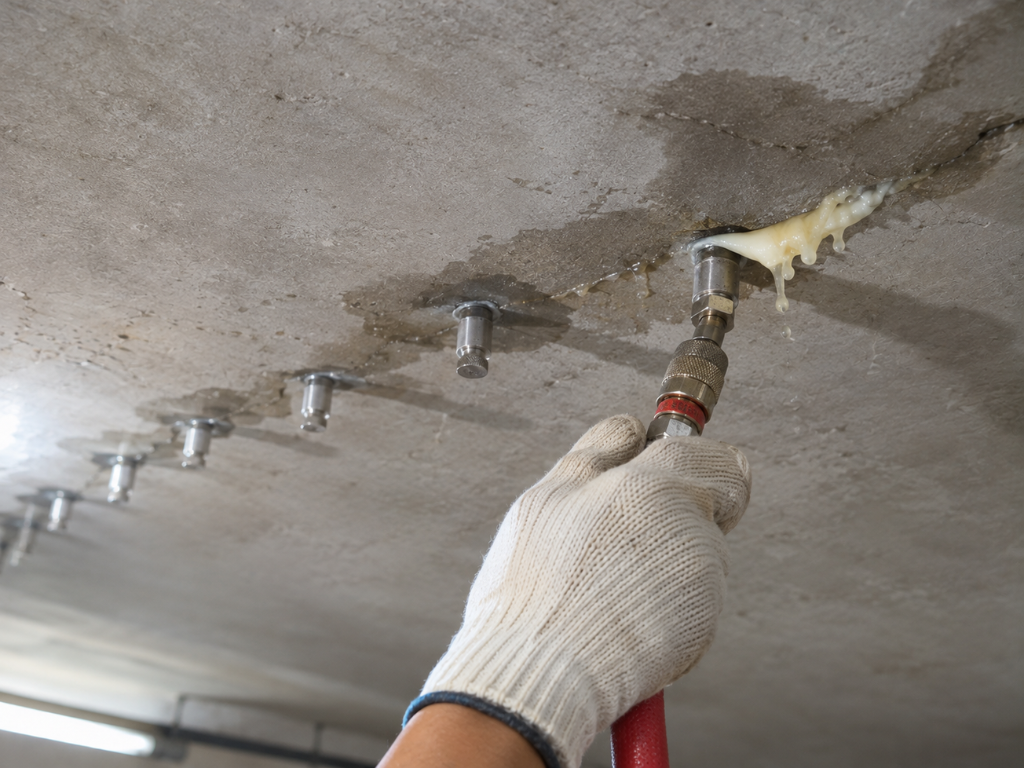
PU injection is the right call when water comes through one RC slab crack or a cold joint. A cold joint is the seam where two concrete pours meet, often where the roof slab meets the parapet wall. The contractor drills small injection ports called packers along the crack, then pumps in polyurethane resin. The resin foams inside the crack and blocks the water path.
For an active leak, the resin should be hydrophobic PU, which reacts with water and stays watertight once set. It can go in while the ceiling is still dripping, which no roof-top method can do, and nobody has to open up the roof finish.
You’ll notice a row of drilled holes along the crack, filled and patched afterwards. Our PU grouting service page covers the wall, ceiling and floor cracks we inject.
The catch is that injection seals the path water uses today, not the waterproofing above it. If the roof membrane has failed, water keeps soaking the slab and comes out at the next crack. Get the re-injection terms in writing, and our guide to PU injection grouting prices explains what changes the quote.
When is a membrane patch enough?
A patch is enough when testing shows one detail failed and the membrane around it is still sound and stuck down. The usual culprits are an upturn at the parapet wall, a drain outlet or a pipe hole. A lap where two torch-on sheets meet and have lifted is another.
The contractor cuts the failed section back to firm membrane, then rebuilds it with a compatible material that overlaps onto the sound area. A torch-on roof gets a torch-on patch, and a liquid system can be recoated in place. The work happens on the roof, not in your ceiling, and one detail is often a day’s job.
A patch is only as good as the membrane it joins. On a roof that is brittle everywhere, it holds that spot and the leak moves a metre along. It also needs a dry surface, so a patch rushed between showers is a patch you pay for again.
When does the roof need a new coating or membrane?
Replace the waterproofing when it has failed across the roof, because at that point every patch and injection is a holding job. These signs point that way:
- the membrane is brittle, cracked or blistered across open areas
- it lifts or sounds hollow when you press or tap it
- leaks show in more than one room, or move after each repair
- water ponds across large areas for days after rain
- nobody knows when the roof was last waterproofed
There are two main choices. A liquid coating, usually PU applied in two or three coats, forms one continuous layer and suits roofs broken up by plinths, pipes and outlets. A torch-on membrane, bitumen sheets heated to bond to the slab, suits big plain roofs and is watertight once bonded. Our comparison of torch-on and liquid waterproofing covers which suits which roof.
Either gives the longest service life of the three methods, as long as it goes onto a dry, sound slab. Ask how much of the old layer comes off, because a new layer over a wet or loose one traps the water and fails.
Expect the roof to be out of use for several days. Ask for the system to be laid to SS 637:2018, the Singapore code of practice for waterproofing concrete buildings, and flood tested before handover.
Can you combine PU injection with a new membrane?
Yes, and in the wet months that is often the right plan. Inject the active crack now to stop water reaching the units underneath. Then re-waterproof the roof in a dry weather window, when the deck can dry out and the coats can cure.
That window matters because liquid coatings need dry days in a row, and rain on an uncured coat means stripping and redoing that area. February often falls in the dry phase of the Northeast Monsoon. An MCST facing a leak in November can protect residents now and book the membrane for then.
Agree the whole plan at the start, so the injection is priced as a stop-gap and nobody sells you a third round of it. Three rounds of injection on the same ceiling can cost as much as the membrane itself.
Which water seepage repair method is the wrong one for your leak?
The wrong method is the one chosen before anyone has tested the roof. Injecting crack after crack under a failing membrane is the costly version, because each visit stops one path while the roof keeps feeding water into the slab.
The opposite mistake costs just as much. Paying to re-waterproof a whole roof when one upturn failed buys a new membrane you didn’t need yet, and the old one may have had years left.
Sealant smeared over a roof crack is the cheapest wrong answer. It splits in the sun within months and hides where the water was getting in, so the next contractor starts from scratch.
How do you choose a water seepage contractor for roof seepage treatment?
Choose the contractor who tests before naming a method, and whose quote you can check line by line. A water seepage contractor who offers injection before seeing the roof, or a new coating before seeing the ceiling, is quoting what they sell.
For injection, the quote should name the resin and whether it is hydrophobic, and the number and spacing of packers. It should also say how the holes are made good and what happens if the leak returns. For a patch or a new system, it should name the material, say what gets stripped, include a flood test and set out the warranty.
To tell you which treatment your roof needs, we need photos of the ceiling taken during rain, showing the crack or stain. Add photos of the roof surface above it. Tell us the age and type of the waterproofing if you know them, and any repairs already tried. With those, we can say whether injection will hold or the roof needs waterproofing works across the whole area.
Conclusion
Match the treatment to the leak. Inject a single slab crack, patch a single failed detail, and replace the waterproofing when it has worn out across the roof. In the wet months, inject to stop the drip and book the membrane for drier weather.
To confirm which applies to your roof, we need photos of the ceiling during rain, photos of the roof above it and the repair history. Send them through our enquiry form for a no-obligation quote, or call +65 6100 7558.
Frequently asked questions
Can PU injection be done while we’re living in the unit?
Yes. Injection works from the ceiling side, so the room needs clearing and covering, and there is drilling noise for a few hours. Keep children and pets out while the resin goes in. Proof-Tech usually completes a small or medium grouting job within a day, so you get the room back quickly.
How soon will I know if the treatment worked?
After the next heavy storm. A ceiling that was wet for weeks keeps reading damp for a while, so judge by fresh drips and new stains, not old damp. Repaint only once the ceiling has stayed dry through real rain, and for membrane work, ask for the flood test result before final payment.
Will a coating stop a leak on a tiled roof?
Rarely. Tiled roofs usually leak at the ridge, the valleys or a rotted underlay under the tiles, and a coating on the tile surface reaches none of them. Coating suits tiles that are sound but faded. Fix the tiles, ridge and underlay first, and coat afterwards if you want the finish.
Does Proof-Tech do both PU grouting and waterproofing?
Yes. Proof-Tech carries out PU grouting and roof waterproofing for condominiums, commercial buildings and landed houses, and is BCA-registered for waterproofing installation (CR13). One contractor can inject the active crack now and plan the membrane works, so nobody is left arguing over whose repair failed.