

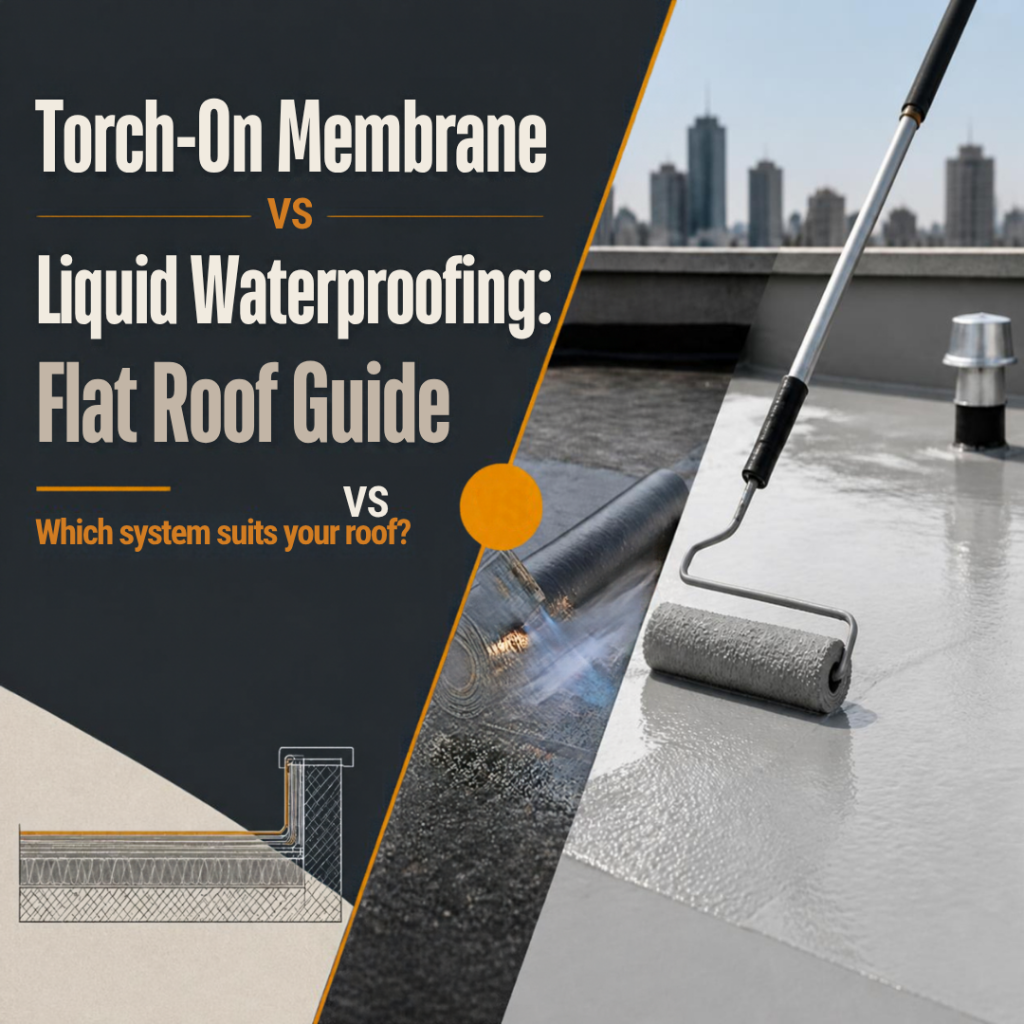
Torch on membrane vs liquid waterproofing comes down to geometry, downtime and fire risk. Torch-on bituminous sheets suit large open RC flat roofs; PU and PMMA liquids suit roofs crowded with upstands, outlets and plant. Published 2026 rates put torch-on at $10 to $22 per square foot against PU at $8 to $15. This blog walks you through both, alongside membrane and liquid waterproofing systems.
Torch-on or liquid: which system suits a Singapore flat roof?
Pick torch-on for large, regular roof areas with few penetrations. Pick a liquid system where the roof is broken up by upstands, plant plinths, gutters and outlets, or where open flame is unacceptable.
| Factor | Torch-on bituminous membrane | PU liquid membrane | PMMA liquid |
| Form | Rolled sheet, flame bonded | Liquid, roller or spray, 2 to 3 coats | Liquid resin with fleece reinforcement |
| Best geometry | Open decks, podiums, large slabs | Irregular areas, plant-heavy roofs | Details, gutters, outlets, tight timelines |
| Weak point | Laps and seams | Film thickness control | Cost, strong odour during application |
| Hot work | Yes, permit and fire watch | No | No |
| Cure to rain | Immediate once bonded | Hours per coat | Under an hour typically |
| Published 2026 rate (DirectHome, JK Roof) | $10 to $22 per sq ft | $8 to $15 per sq ft | Not published |
Both systems fail at the same places: details, falls and substrate. Any specification for RC flat roof works should name the system, the number of layers or coats, and the treatment at every upstand and outlet.
Worth noting: the code covers both. SS 637:2018 sets design and installation practice for waterproofing of reinforced concrete buildings in a tropical climate, and applies whichever system you select.
What is torch-on membrane, and where does it work best?
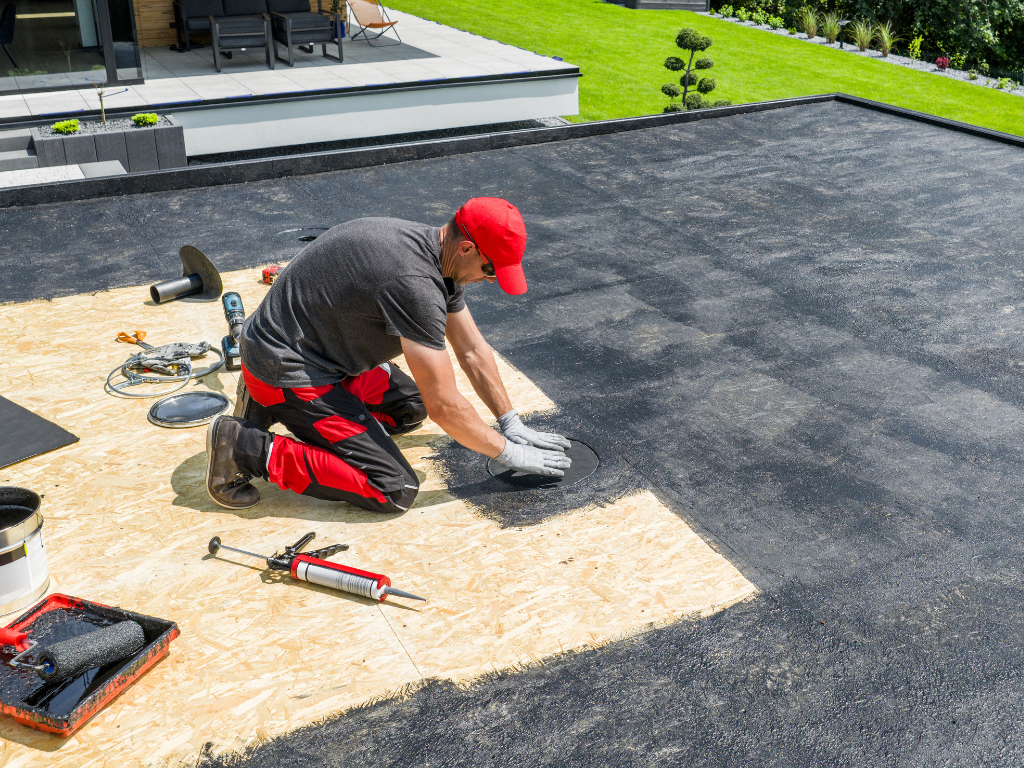
Torch-on is a prefabricated bituminous sheet, APP or SBS modified, unrolled over a primed deck and bonded by melting the underside with a gas torch. Sheets overlap at laps that are welded to form a continuous layer.
Thickness is consistent because the sheet is factory made. That is the main advantage over liquids, where thickness depends on application control. A 3 mm or 4 mm sheet delivers the same film across the whole roof.
Modified bitumen dominates the market for that reason. Yu Chunchun’s December 2024 review in the International Journal of Infrastructure Research and Management puts new-type waterproofing materials at 85.29% of consumption, led by modified bituminous membranes.
Sheets work best where the roof is open. Every penetration, corner and upstand requires cutting, pre-forming and additional collars, so a roof crowded with pipes and plinths turns a fast system into a slow one.
Singapore product standards cover the sheet side too: SS 374:1994 (2023) specifies preformed waterproofing membranes for concealed roofing systems, and SS 133:2017 (2023) covers bituminous emulsion for roof waterproofing.
When is PU liquid waterproofing the better choice?
Choose PU when the roof has complex geometry, when the building cannot accept hot work, or when the existing surface will stay in place. Liquid polyurethane cures into a continuous film that follows any shape without laps.
Two variables decide PU performance: film thickness and substrate preparation. The specification should state wet film thickness per coat, the number of coats and the primer, because a system applied at two coats performs differently from the same product at three.
ETAG 005, now EAD 030350-00-0402, gives owners the language to demand. Liquid roof kits are classified for expected working life as W1 (5 years), W2 (10 years) or W3 (25 years), and separately for climate zone, imposed load, roof slope and maximum surface temperature.
Ask for the classification, not the marketing. A Singapore roof needs the severe climate zone and the high surface temperature category, since exposed membranes here run far above ambient on a clear afternoon.
PU also wins on future maintenance. A damaged area is cleaned, primed and recoated in place, with no need to cut and weld sheet.
What is PMMA, and why does it cost more?
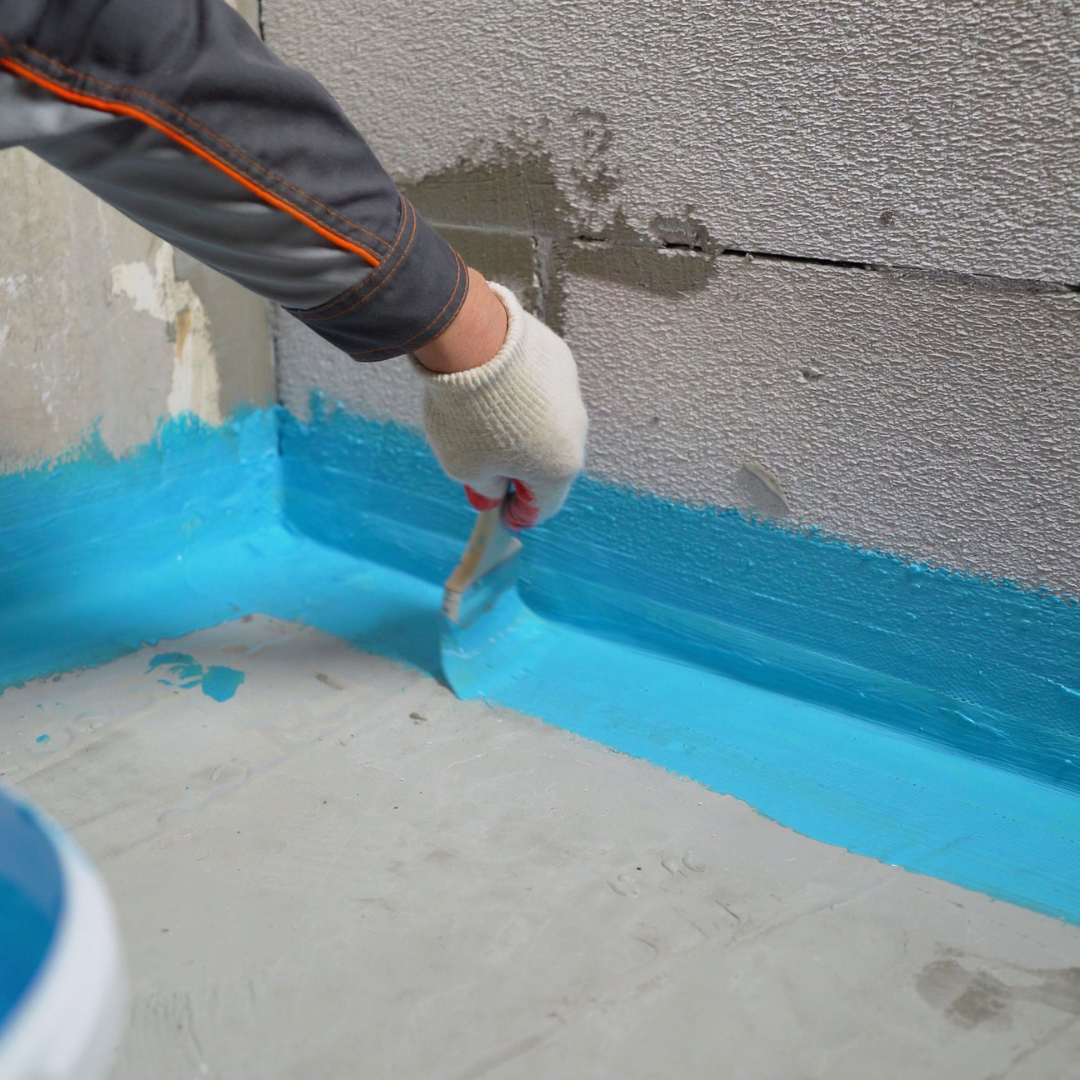
PMMA is a methyl methacrylate resin applied with fleece reinforcement, and system data sheets put its cure at around an hour rather than overnight. That speed is what owners are paying for.
Fast cure changes what is possible on an occupied building. Details around outlets, gutters and plant bases can be waterproofed between rain showers, and a walkway or loading area can return to use the same day.
PMMA is also the system of choice for detail work alongside another membrane. Many roofs are specified with a sheet or PU system in the field and PMMA at outlets, upstands and awkward junctions where a reinforced, fast-setting resin performs best.
The trade-offs are real. PMMA carries the highest material cost of the three, and the catalysed resin gives off a strong odour during application, which needs planning on occupied buildings with fresh air intakes nearby.
In practice, PMMA earns its price on small critical areas rather than whole roofs.
Which system handles ponding water better?
Liquid systems handle ponding better, because they have no laps to fail. Water that sits for days finds seams before it finds a continuous film.
Ponding is a Singapore constant. Flat roofs here receive rain every month, so blocked outlets and flat falls leave standing water on the same spots year after year.
Sustained wet loading matters more in the tropics. Yu’s 2024 review states that “the impact of sustained loading is more pronounced under high-temperature conditions”, which describes a Singapore roof deck holding water under afternoon sun.
Neither system fixes the cause. Falls and outlet capacity do. Where ponding has already damaged the deck, the scope starts with concrete substrate repair, then screed to restore falls, and only then the membrane.
Our position: if a roof ponds after the works, the system choice was never the problem. Fix the falls in the same contract or expect the same leak.
Which survives UV exposure and foot traffic?
Exposed bituminous sheets need a surfacing layer against UV: mineral granules or a reflective coating. PU systems need a UV-stable topcoat. PMMA holds up well under UV without a separate sacrificial layer.
Foot traffic has its own classification. ETAG 005 grades liquid kits from P1, which covers occasional maintenance access, up to P4 for special loads including roof gardens and inverted roofs, and it requires at least W2 durability for those uses.
Roof decks used for plant maintenance need more than a membrane. Walkway pads, protection boards or a screed and tile layer keep technicians off the waterproofing.
Heat is the quieter problem. Torch-on sheets soften at high surface temperatures, which is why laps opened by foot traffic on hot afternoons appear as leaks months later.
Specify the protection layer in the same document as the membrane. A system rated for 25 years under ETAG 005 still fails early if plant contractors drag equipment across it.
Does torch-on require a hot works permit in Singapore?
Yes. Torch application is hot work, so it needs a permit-to-work, a competent person’s check of the area, a fire watch during the work and monitoring after it stops.
That obligation lands on live buildings hardest. SCDF recorded 2,050 fires in 2025, with fires at non-residential premises rising 13.5% to 471, and the WSH Council’s guidance treats the permit-to-work system as the control for hot work.
The practical consequences show up in the programme. Gas cylinders have to be stored and transported to roof level, combustible materials cleared from the work zone, and building management notified so fire detection is isolated and reinstated correctly.
Liquid systems sidestep all of it. For an occupied mall, hospital or office tower, that alone decides the choice, which is why specifications for commercial building waterproofing on operating assets bar open flame outright.
Where this breaks down is the quotation that prices torch-on for an occupied building without a line for permits, fire watch or out-of-hours access.
How long does each system take, including curing?
Torch-on is watertight as soon as the sheet is bonded. Liquid systems need cure time between coats, and the full build-up takes days rather than hours.
Rain windows drive the programme in Singapore. A PU system applied in two or three coats needs consecutive dry periods, and rain on an uncured coat means stripping and redoing that area.
PMMA compresses the schedule. A cure measured in an hour lets a crew complete a detail, test it and move on within a shift, which is why it appears at outlets and gutters even on sheet-membrane roofs.
Both systems end the same way. BCA’s Quality Mark Scheme guide sets a minimum 24-hour ponding test, and the test comes after the manufacturer’s stated cure period, not before.
Plan the sequence against the wet season. Building the programme around preventing roof water damage means scheduling membrane works when the deck can be kept dry for the cure, and protecting completed sections while adjacent work continues.
What do they cost, and how long do they last?
Rates published by DirectHome and JK Roof in 2026 put torch-on membrane at $10 to $22 per square foot and PU coating at $8 to $15, with acrylic coatings cheaper and shorter-lived. Service life depends on classification and protection rather than the system family.
ETAG 005 anchors the durability question. A kit certified W3 has been tested for a 25-year expected working life, W2 for 10 years and W1 for 5. A supplier quoting “long lasting” without a category is quoting nothing.
Building-scale replacement contracts show the stakes. Sentosa Development Corporation awarded $1,798,000 in August 2021 to replace a roof waterproofing membrane system on a three-storey building, and JTC awarded $5,032,000 in April 2025 to replace the waterproofing system at Revenue House and The Treasury.
Cost per year matters more than cost per square foot. A cheaper system replaced twice in a period where a classified system lasts through costs more, and doubles the disruption on an occupied building.
Comparison discipline applies here too. The same checks that go into picking a roofing contractor apply to system choice: named product, stated coats or layers, classification, protection layer and test regime.
Conclusion
Geometry and occupancy decide this choice more than the membrane chemistry does. Open decks reward sheet membrane and its factory-set thickness; plant-crowded roofs and live buildings reward joint-free liquids that need no flame. Falls, substrate repair and details decide whether either system reaches its rated life, and the ETAG classification plus a 24-hour ponding test are what turn a promise into evidence.
Send Proof-Tech your roof plan, photographs of the outlets and upstands, and any leak history for a system recommendation and an itemised quotation covering preparation, falls, membrane and test.
Frequently asked questions
Can liquid waterproofing be applied over an existing torch-on membrane?
Yes, where the existing sheet is sound and well bonded. The old membrane is cleaned, blisters and open laps are cut back and repaired, and a compatible primer is applied before the liquid coats. Blistered or debonded sheet must come off first, which DirectHome prices at $3 to $6 per square foot in its 2026 rates.
Which system suits roof gardens and planter boxes?
Root-resistant systems designed for the load. ETAG 005 requires kits used on roof gardens, inverted roofs and green roofs to be classified at least W2 (10 years) with the higher imposed load categories, and SS 637:2018 added recommendations for green roofs and rooftop gardens when it replaced CP 82:1999.
What standard should a Singapore waterproofing specification cite?
SS 637:2018, the Code of practice for waterproofing of reinforced concrete buildings. It replaced CP 82:1999 on 26 March 2018, runs to 64 pages, and extended the waterproofing ponding test requirement from 12 hours to 24. Product standards SS 374 and SS 133 cover preformed membranes and bituminous emulsion.